
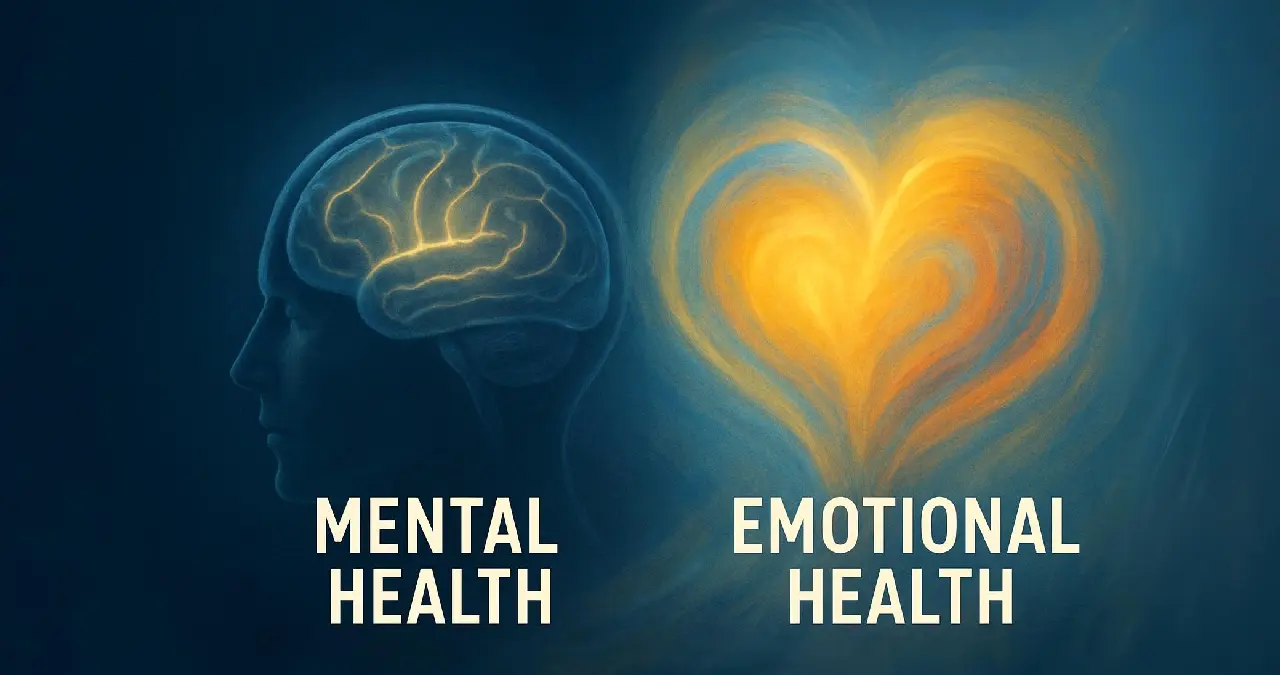
Ever been unsure whether you’re “mentally exhausted” or just “emotionally drained”? That confusion is normal — the two terms are related but different. This guide will help you compare and contrast mental health and emotional health, so you can spot the signs, use the right tools, and get the right help. Read on for clear definitions, real-life examples, practical tips, and a quick self-checklist you can use today.
What Is Mental Health?
Mental health: scope in plain words
Mental health describes how your mind functions over time — your thinking, concentration, decisions, and ability to tackle daily tasks. It’s broad: it includes both feeling well mentally and facing diagnosable conditions like depression, anxiety disorders, bipolar disorder, and psychotic disorders.
Why it matters
Good mental health helps you work, form relationships, and make sound choices. Poor mental health often disrupts these areas for weeks or months and can require professional treatment.
Mental health vs. mental illness
Mental health = the spectrum of psychological well-being. Mental illness = diagnosable conditions on that spectrum that significantly impair functioning. Imagine mental health as the road; mental illness is when the road has a major sinkhole.
What Is Emotional Health?
Emotional awareness and regulation
Emotional health is about how you identify, understand, and manage feelings — both your own and others’. It’s the toolbox you use when stress, sadness, anger, or joy shows up.
Emotional elasticity (resilience)
Emotionally healthy people notice feelings early, name them, and respond constructively. They rebound from setbacks and keep relationships intact. Emotional skills can be learned and practiced — they’re not fixed.
Core Differences: Mental Health vs Emotional Health
1. Focus: Thinking vs Feeling
- Mental health centers on thought patterns, cognition, and overall psychological function.
- Emotional health focuses on the experience and handling of emotions.
2. Time & Pattern: Traits vs States
- Emotions change rapidly (state).
- Mental disorders often reflect ongoing patterns that persist over time (trait or long-term condition).
3. Diagnosis & Measurement
- Mental health conditions have diagnostic criteria (DSM/ICD) and formal screening tools.
- Emotional health is usually evaluated by observation, emotional intelligence tests, and therapy assessment.
How Mental and Emotional Health Interact
A two-way street
Thoughts shape feelings; feelings shape thoughts. Constant worry (a thought pattern) increases anxiety (an emotion). Emotional turmoil (like long-term grief) can warp thinking and lead to depressive episodes. They feed each other — so working on one helps the other.
Real examples
- Anxiety: racing thoughts (mental) + persistent fear or panic (emotional).
- Depression: negative thinking (mental) + low mood or numbness (emotional).
- Grief: normal emotional response that may deepen into clinical depression if lasting and harmful.
Signs & Symptoms — What To Watch For
Red flags for mental health issues
- Persistent low mood or high anxiety for weeks
- Trouble concentrating or making decisions
- Major changes in sleep or appetite
- Withdrawal from work/relationships
- Thoughts of self-harm or hopelessness
If these impair daily life, seek professional help.
Red flags for emotional health struggles
- Frequent, intense mood swings
- Difficulty naming or expressing feelings
- Repeated outbursts or emotional avoidance
- Using unhealthy behaviors to cope (substance use, self-harm)
- Relationship conflicts tied to unmanaged emotions
Causes & Risk Factors
Biological & genetic influences
Genes, neurochemistry, and brain structure can predispose people to mental health disorders.
Trauma & life experiences
Childhood trauma, abuse, or major life losses shape both emotional and mental health. Prolonged stress lowers resilience.
Lifestyle & social factors
Poor sleep, lack of exercise, isolation, excessive alcohol or drugs, and unstable environments increase risk for both mental and emotional problems.
Assessment: How Professionals Evaluate Each
Tools for mental health assessment
Clinicians use validated tools such as PHQ-9 (depression) and GAD-7 (anxiety) plus clinical interviews and DSM/ICD criteria to diagnose and plan treatment.
Assessing emotional health
Therapists may use emotional intelligence inventories, observational assessment, journaling, and role-play to measure awareness, regulation, and interpersonal skills.
Treatments & Support That Work
Clinical treatments for mental health
- Therapies: CBT (Cognitive Behavioral Therapy), DBT (Dialectical Behavior Therapy), psychodynamic therapy
- Medications: antidepressants, mood stabilizers, anxiolytics (as prescribed)
- Combined care: therapy + meds often gives the best results for many conditions
Skills-based approaches for emotional health
- Mindfulness to notice feelings without reacting
- Emotion labeling (name the feeling: “I feel angry”)
- Grounding/breathing techniques to reduce intensity
- Emotional exposure and tolerance practice
When to combine approaches
When emotional difficulties produce lasting impairment or when biological drivers (sleep disruption, severe mood swings) exist, combine therapy, skills training, and medical input.
Practical Daily Tools to Improve Both
Routines, sleep, movement, and nutrition
- Prioritize consistent sleep schedule
- Move daily (even 20 minutes helps mood)
- Eat balanced meals and reduce heavy alcohol use
Small habits protect brain chemistry and emotional reactivity.
Mindfulness, journaling & social connection
- Mindfulness: 5–10 minutes daily reduces reactivity.
- Journaling: names, feelings and patterns — great for clarity.
- Social support: talk, vent, and get perspective — connection is medicine.
Workplace & School: How to Support Both
Policy & accommodations
- Flexible schedules, quiet spaces, and counselling access for those with diagnosed mental health needs.
- Preventive programs like resilience and emotional literacy workshops for everyone.
Training for leaders & teachers
Emotional literacy training helps leaders normalize emotions and spot when someone needs support. It creates safer environments and reduces stigma.
Common Myths and Misconceptions
Myth: “Emotional = Weak”
Expression is not weakness — it’s information. Emotions tell you what matters and can guide healthy action.
Myth: “Mental illness = permanent”
Many people recover or manage conditions with the right care. Focus on management and recovery, not permanence.
Quick Self-Checklist: Where Are You?
Mental health quick checks
- Can you focus and complete tasks?
- Do you sleep and eat normally?
- Are mood changes impairing daily life?
Emotional health quick checks
- Can you name how you feel?
- Do you calm down after being upset?
- Are your relationships generally stable?
If multiple answers are “no” for several weeks, consider talking to a healthcare professional.
How to Talk With Someone Who’s Struggling
- Ask open questions: “How are you managing today?”
- Validate feelings: “That sounds really hard.”
- Offer practical help: “Would you like me to help find a counselor?”
- Know crisis signs: if someone talks about harming themselves, get immediate professional help.
Conclusion
Mental health and emotional health are linked but distinct. Mental health centers on cognitive patterns and diagnosable conditions; emotional health is about feeling awareness, regulation, and interpersonal skill. Strengthening emotional skills is preventive — and professional mental health care is vital when the problem impairs daily functioning. Practice daily habits, learn emotion skills, and reach out for help when needed. Your mind and emotions both deserve attention — treat them as teammates, not enemies.
FAQs
No. Emotional problems often reflect skills or reactions to events, while mental illnesses are diagnosable conditions that typically require clinical treatment. That said, prolonged emotional difficulties can contribute to or signal a mental disorder.
Improving emotional skills reduces stress and bolsters resilience, lowering some risk factors for mental illness — but it’s not a guaranteed prevention method.
If problems last several weeks, interfere with work/school/relationships, or involve thoughts of self-harm, see a professional promptly.
A 10-minute daily routine: 5 minutes of mindful breathing, 3 minutes of gratitude journaling, and light stretching.
Yes. Many therapies teach emotion skills (e.g., DBT, ACT, emotion-focused therapy) and help people regulate feelings and improve relationships even when there’s no formal diagnosis.
