
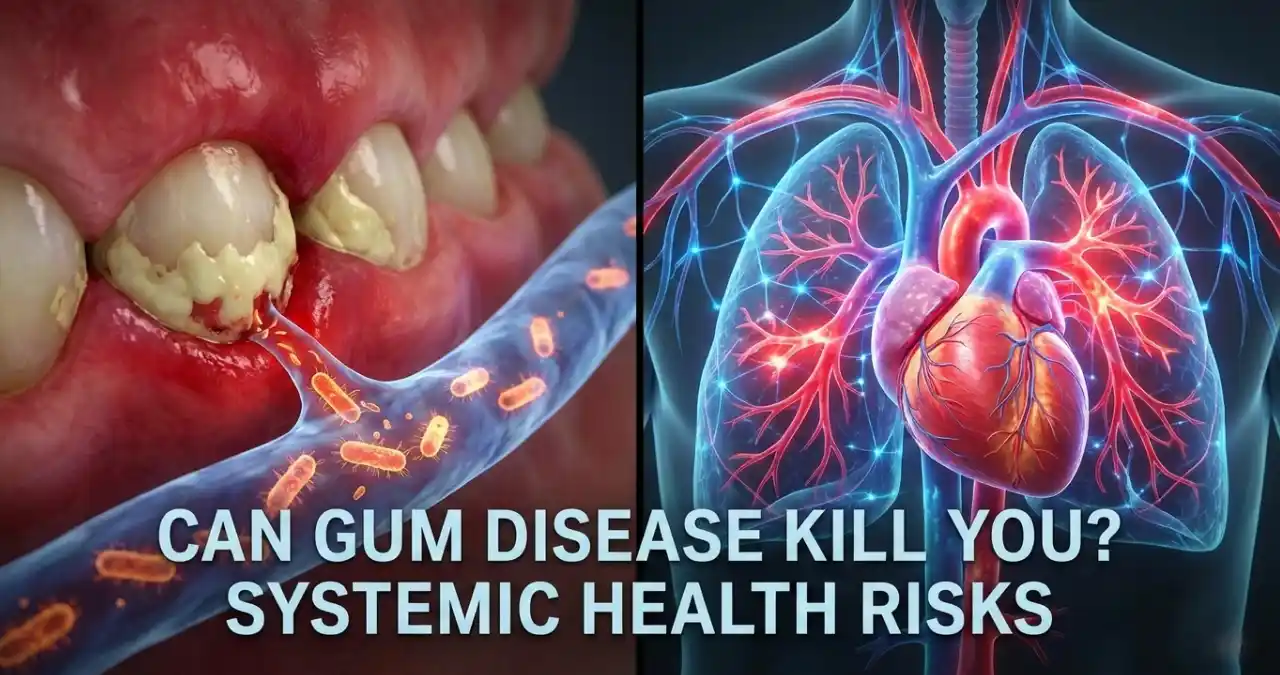
Can gum disease kill you?
It sounds extreme, but the answer is more serious than most people realize.
Many think gum disease is just about bleeding gums, bad breath, or losing teeth. In reality, untreated gum disease is a chronic infection that can affect your entire body. Harmful oral bacteria and long-term inflammation can enter the bloodstream, increasing the risk of heart disease, stroke, diabetes complications, respiratory infections, and even life-threatening sepsis.
Your mouth is not separate from your body—it’s the gateway to your overall health. Ignoring gum disease can quietly lead to consequences far beyond your smile.
What Is Gum Disease?
Gum disease, medically known as periodontal disease, is a bacterial infection of the gums and the bone that supports the teeth. It starts when dental plaque, a sticky film of bacteria, builds up along the gumline.
If plaque is not removed through proper brushing and flossing, it hardens into tartar, leading to inflammation, infection, gum recession, and gradual bone destruction.
Types of Gum Disease
Gingivitis (Early Stage)
Gingivitis is the mildest form of gum disease and is very common.
Symptoms include:
- Red, swollen gums
- Bleeding during brushing or flossing
- Mild gum irritation
✅ Gingivitis is reversible with good oral hygiene and professional dental cleaning.
Periodontitis (Advanced Stage)
If gingivitis is ignored, it progresses to periodontitis, a serious chronic condition where:
- Infection spreads below the gumline
- Deep gum pockets trap bacteria
- Bone supporting the teeth is destroyed
- Teeth loosen or fall out
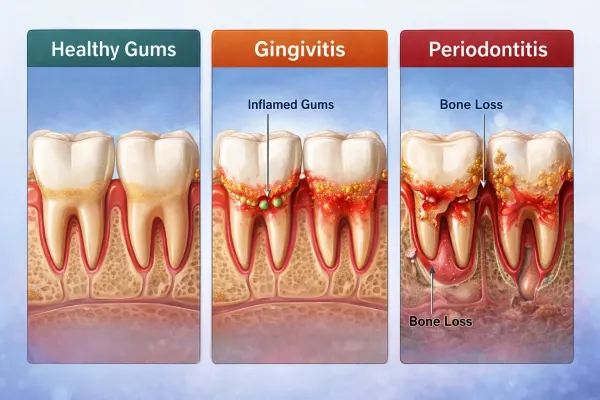
At this stage, gum disease becomes a systemic health risk, not just a dental issue.
How Common Is Gum Disease?
Gum disease is extremely common worldwide. Millions of adults have it—often without knowing it.
Why?
Because early gum disease is usually painless.
By the time symptoms become severe, irreversible damage may already have occurred.
What Causes Gum Disease?
Common causes and risk factors include:
- Poor brushing and flossing habits
- Plaque and tartar buildup
- Smoking or tobacco use
- Diabetes
- Weak immune system
- Hormonal changes
- Stress and poor nutrition
Early Warning Signs You Should Never Ignore
- Bleeding gums
- Persistent bad breath
- Swollen or tender gums
- Receding gum line
- Loose or shifting teeth
Important: Gum disease often progresses without pain. Lack of pain does not mean lack of danger.
What Happens If Gum Disease Is Left Untreated?
Untreated gum disease:
- Progresses from gingivitis to periodontitis
- Causes permanent gum and bone loss
- Leads to tooth loss
- Allows bacteria to enter the bloodstream continuously
This ongoing infection is what increases the risk of life-threatening health complications.
How Untreated Gum Disease Affects the Body
1. Heart Disease and Stroke
Medical research shows that chronic gum inflammation:
- Increases systemic inflammation
- Contributes to plaque buildup in arteries
- Raises the risk of heart attacks and strokes
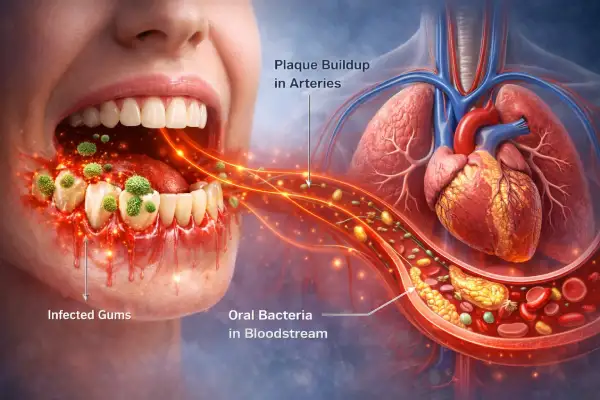
Oral bacteria have been found inside arterial plaques, showing a direct link between gum disease and cardiovascular disease.
2. Diabetes Complications
Gum disease and diabetes have a two-way relationship:
- Gum infections make blood sugar harder to control
- High blood sugar worsens gum disease
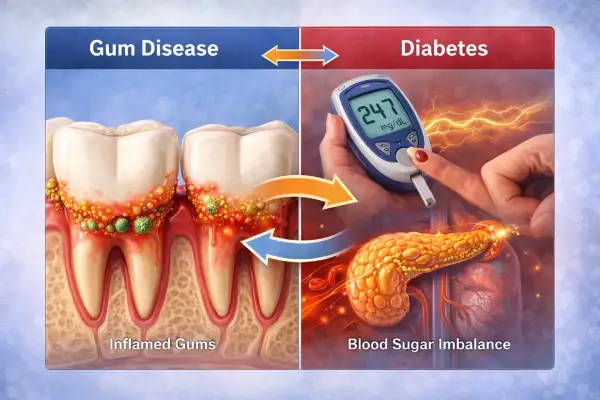
This cycle increases the risk of heart disease, kidney failure, and nerve damage.
3. Respiratory Infections
Bacteria from infected gums can be inhaled into the lungs, especially in:
- Older adults
- People with weakened immune systems
This raises the risk of pneumonia and chronic lung infections, which can be fatal in vulnerable individuals.
4. Sepsis (Life-Threatening Condition)
In rare but severe cases, untreated gum infections can enter the bloodstream and trigger sepsis, a medical emergency that can cause:
- Organ failure
- Septic shock
- Death

5. Pregnancy Complications
Untreated gum disease during pregnancy has been linked to:
- Preterm birth
- Low birth weight
These complications can be dangerous for both mother and baby.
Who Is at Highest Risk?
- Elderly individuals
- Smokers and tobacco users
- People with diabetes or heart disease
- Individuals with weakened immune systems
How Dentists Diagnose Gum Disease
Diagnosis may include:
- Measuring gum pocket depth
- Checking for inflammation and bleeding
- Dental X-rays to assess bone loss
Treatment Options for Gum Disease
Non-Surgical Treatments
- Professional deep cleaning
- Scaling and root planing
- Antibacterial therapy
Surgical Treatments (Advanced Cases)
- Gum surgery
- Bone grafting
Long-Term Management
- Regular dental checkups
- Strict daily oral hygiene
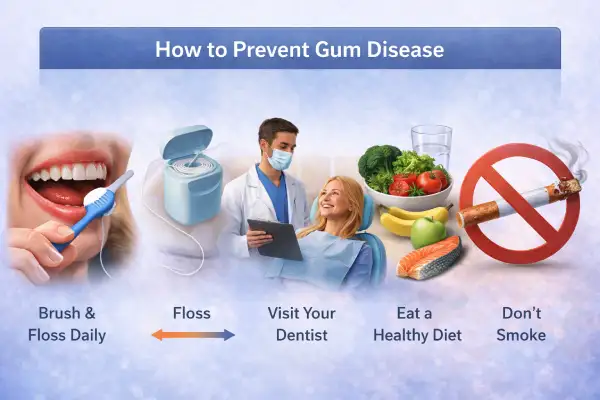
How to Prevent Gum Disease
- Brush twice daily
- Floss once daily
- Use antimicrobial mouthwash
- Quit smoking
- Maintain a balanced diet
- Manage chronic health conditions
- Visit your dentist regularly
Why Early Treatment Can Save Your Life
Early treatment:
- Reduces chronic inflammation
- Lowers heart and diabetes risks
- Prevents serious infections
- Protects vital organs
Treating gum disease early doesn’t just save teeth—it protects your overall health and longevity.
Conclusion
So, can gum disease kill you?
Yes—indirectly.
Untreated gum disease is far more than a dental problem. It is a chronic infection that can increase the risk of heart disease, diabetes complications, respiratory infections, and life-threatening sepsis.
The good news is that gum disease is preventable and treatable when detected early. Protecting your gums can help protect your life.
FAQs
Yes. Untreated gum disease can contribute to fatal conditions like heart disease, stroke, sepsis, and diabetes complications.
It can progress silently for years while causing increasing damage and health risks.
Early gingivitis can be reversed with brushing and flossing. Advanced gum disease requires professional treatment.
Yes. Chronic gum inflammation increases the risk of heart attacks and strokes.
If you notice bleeding gums, bad breath, swelling, gum recession, or loose teeth, see a dentist immediately.
