

Just had a dental implant and wondering how to relieve pain from dental implant quickly and safely? You’re in the right place. The first few days can be uncomfortable, but with the right steps — immediate relief, smart medication choices, gentle home care, and red-flag awareness — you’ll speed healing and feel a lot better fast.
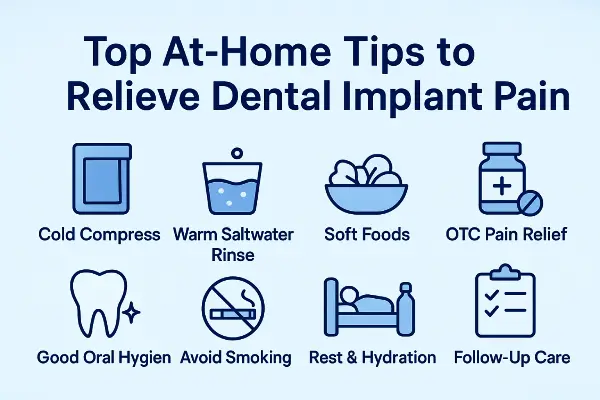
Quick Relief Checklist (0–48 hours)
- Ice pack: 10–20 min on / 10–20 min off for first 24 hours.
- Take recommended OTC pain medicine (ibuprofen preferred unless contraindicated).
- Keep your head elevated while resting.
- No straws, no smoking, no heavy exercise.
- Start gentle saltwater rinses 24 hours after surgery.
- Soft food only, cool or room temperature.
What to expect: typical healing timeline
Immediate (0–48 hours)
Soreness and swelling often peak during this period. Blood clot formation and initial tissue repair are happening under the surface.
Early recovery (3–7 days)
Pain should diminish daily. Stitches (if present) may be removed or dissolved. Continue gentle care.
Medium term (2–6 weeks)
Tissue settles and tenderness fades; full osseointegration continues over months but discomfort should be minimal.
Why you feel pain after a dental implant
Pain is your body’s natural response to surgical trauma — inflammation, local swelling, and nerve irritation. The intensity depends on surgical complexity, individual pain tolerance, and whether a bone graft was used.
First 24 hours: immediate steps to reduce pain and swelling
Cold compresses: how and why
Apply an ice pack wrapped in a thin cloth to the cheek beside the implant. Use intervals: 10–20 minutes on, 10–20 minutes off. Cold reduces blood flow and numbs the area, helping pain and swelling.
Positioning and rest
Rest with your head elevated (one extra pillow). Avoid bending over or heavy lifting — those increase blood pressure at the surgical site and can worsen bleeding and pain.
Medication: safe, effective options at home
OTC pain relievers: NSAIDs vs acetaminophen
- Ibuprofen (NSAID) reduces pain and inflammation — often the best first option.
- Acetaminophen reduces pain but not inflammation; useful if NSAIDs are contraindicated.
- Combining both (staggered per dosing guidelines) often offers strong relief — but never exceeds daily dose limits. If you take prescription blood thinners, have ulcers, kidney disease, or liver disease, consult your provider first.
When the dentist prescribes stronger meds
If OTC meds don’t control pain, your dentist may prescribe stronger analgesics or short courses of antibiotics if infection is suspected. Follow directions exactly.
Gentle oral care: protect the site, avoid infection
Saltwater rinses — simple, effective
Mix ½–1 teaspoon of table salt in a cup of warm water. Gently rinse starting 24 hours after surgery, 3–6 times per day — especially after meals. Do not rinse aggressively; gentle swishing is enough.
Brushing and flossing around the area
Keep the rest of your mouth clean. Use a soft toothbrush and gently clean teeth away from the surgical site. Avoid direct vigorous brushing over the wound for the first week unless your dentist says otherwise.
Diet and eating: what helps the healing process
Foods to eat
Yogurt, smoothies (no straw), mashed potatoes, scrambled eggs, applesauce, pureed soups (warm, not hot), cottage cheese — soft and nutrient-dense.
Foods to avoid
Crunchy, hard, sticky, or spicy foods; nuts; chips; and anything requiring heavy chewing that can irritate or dislodge healing tissue.
Drinking tips
No straws for 7–10 days (suction dislodges clots). Avoid alcohol during early healing because it interferes with medications and delays tissue repair.
Home remedies that actually help (and what to avoid)
Warm compresses after 48 hours
Switch to warm compresses after the initial 48 hours to improve circulation and promote tissue healing. Use 10–20 minutes 2–3 times daily.
Topical options: clove oil and numbing gels
Clove oil provides brief numbing when diluted and applied carefully. Over-the-counter topical gels with benzocaine can help short term — use sparingly and follow label instructions. These are temporary measures and not substitutes for systemic pain control when needed.
Avoid unproven remedies
Don’t use harsh rubbing alcohol, hydrogen peroxide for routine rinsing, or home procedures that could push bacteria into the wound. Follow professional aftercare instructions.
Lifestyle choices that speed recovery
Stop smoking (or delay)
Nicotine constricts blood vessels and slows healing; it raises infection and implant failure risk. If possible, avoid smoking for weeks before and after surgery.
Limit alcohol
Alcohol inhibits immune response and can interact with pain meds.
Sleep, hydration, and gentle movement
Good sleep and staying hydrated support tissue repair. Short gentle walks are OK; avoid strenuous exercise for the first week.
Recognizing complications — when to call your dentist now
Signs of infection
- Increasing redness, warmth, swelling after day 3
- Persistent or spiking fever
- Foul taste or pus drainage
Persistent or worsening pain
If pain increases after an initial improvement, or becomes severe and won’t respond to recommended meds, contact your dentist.
Loose implant or unusual sensations
Movement at the implant site, or a metallic feeling that wasn’t there, needs immediate evaluation.
What your dentist might do if pain continues
- Examine the site and take an X-ray to confirm implant position.
- Drain any abscess and/or prescribe antibiotics for infection.
- Adjust or remove a temporary crown if it’s hitting too hard.
- Recommend a targeted pain plan or referral for further care.
Early assessment prevents larger problems.
Preventive tips before surgery to minimize post-op pain
- Discuss anesthesia options and pre-medication (some dentists give anti-inflammatories pre-op).
- Ask about minimally invasive approaches and whether bone grafting is needed (grafts add to recovery time).
- Share your full medical history (blood thinners, diabetes, allergies) so the team plans accordingly.
Conclusion
Dealing with implant discomfort is temporary, and most pain can be controlled at home with timely, sensible steps: cold first, then heat later; appropriate OTC meds; gentle oral care; soft food choices; and avoiding smoking and straws. Stay alert for signs of infection or worsening pain and contact your dental team if anything feels off. With the right aftercare, you’ll move from “ouch” to “all good” quickly — and get to enjoy the long-term benefits of your implant.
Frequently Asked Questions
Most people have the worst pain in the first 48–72 hours, then steady improvement over the next 1–2 weeks. Mild tenderness can continue for several weeks. If severe pain persists or worsens, contact your dentist.
Yes — they work differently and are often safely combined for short periods if you follow dosing instructions and have no contraindications. Check with your doctor if you have liver disease, kidney disease, ulcers, or take blood thinners.
Begin gentle warm saltwater rinses about 24 hours after surgery, 3–6 times a day, especially after meals. Don’t rinse vigorously; keep it gentle to avoid disturbing healing tissue.
They can provide brief relief, but use sparingly and follow the label. They don’t replace systemic pain control and should not be swallowed. If you have any allergies, check with your dentist first.
Seek immediate help for uncontrolled bleeding, severe or worsening pain after day 3, high fever, pus drainage, difficulty breathing or swallowing, or if the implant feels loose.
