
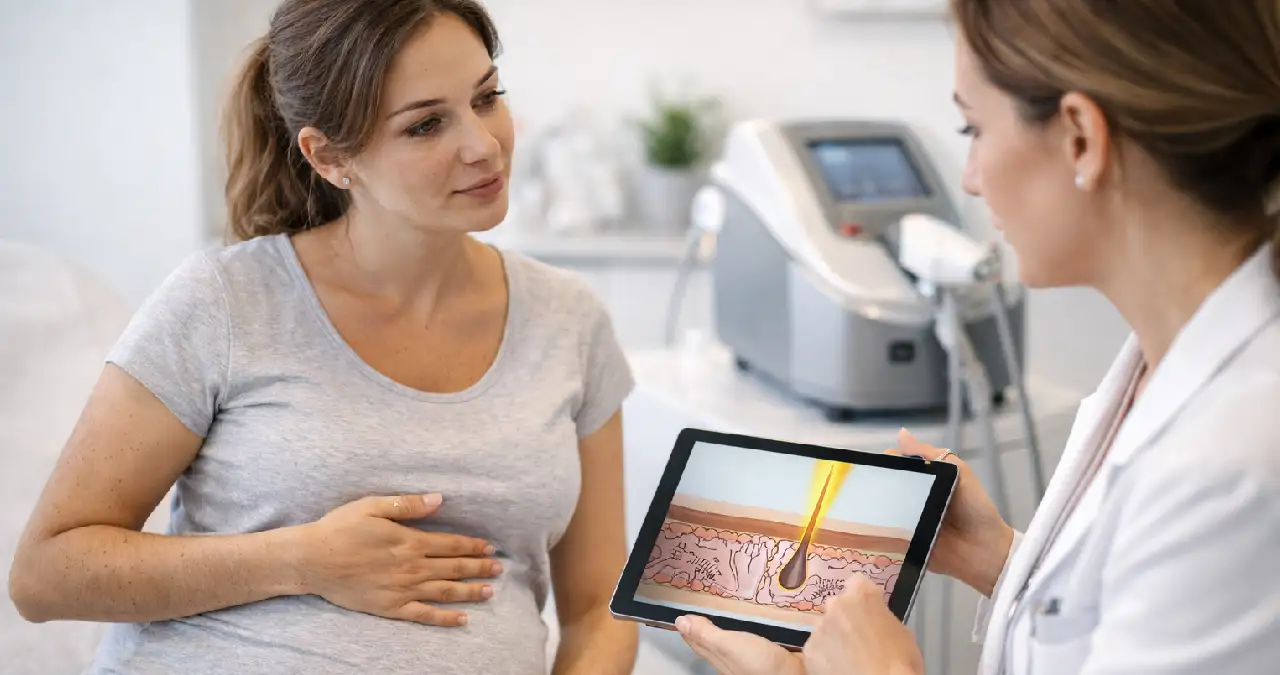
Pregnancy is a beautiful journey, but let’s be honest—it also comes with a long list of unexpected body changes. One surprise many women notice is increased hair growth in places where it never existed before. Suddenly, the mirror shows thicker facial hair, darker arm hair, or faster regrowth everywhere. That’s when the question naturally pops up: can I continue my beauty routines as usual?
This is where laser hair removal during pregnancy becomes a hot topic. With smooth, long-term results and less hassle than shaving every other day, laser treatments sound tempting. But here’s the big concern—is laser hair removal safe during pregnancy? Let’s break it all down in a clear, honest, and science-backed way.
Understanding Laser Hair Removal
What Is Laser Hair Removal?
Laser hair removal is a cosmetic procedure that uses concentrated light beams to target hair follicles. The pigment in the hair absorbs the light, which damages the follicle and slows down future hair growth. Over multiple sessions, hair becomes finer, lighter, and eventually stops growing in many areas.
It’s popular because it offers longer-lasting results compared to shaving, waxing, or threading.
How Does Laser Hair Removal Work?
Think of it like a heat-seeking missile. The laser focuses only on the dark pigment (melanin) in the hair, not the surrounding skin. The energy converts into heat, disabling the follicle without breaking the skin surface.
Types of Lasers Commonly Used
- Diode Lasers – Suitable for most skin types
- Nd:YAG Lasers – Safer for darker skin tones
- Alexandrite Lasers – Effective for lighter skin with dark hair
Each type penetrates the skin differently, which matters a lot during pregnancy.
Why Hair Growth Increases During Pregnancy
Hormonal Changes Explained
Pregnancy hormones—especially estrogen and progesterone—go into overdrive. These hormones prolong the hair growth phase, meaning less hair falls out and more stays put. The result? Thicker, darker, and faster-growing hair.
Common Areas of Excess Hair Growth
- Face (upper lip, chin)
- Abdomen
- Chest
- Arms and legs
- Back (yes, it happens)
While completely normal, it can feel frustrating—especially when you’re already dealing with enough changes.
Laser Hair Removal During Pregnancy: Is It Really Safe?
Is Laser Hair Removal Safe During Pregnancy?
Here’s the straightforward answer: there’s no solid evidence proving it’s unsafe—but there’s also no evidence confirming it’s completely safe.
And that gray area is exactly why most doctors recommend avoiding laser hair removal during pregnancy.
What Medical Experts and Dermatologists Say
Dermatologists generally advise postponing cosmetic laser treatments until after delivery. Not because lasers directly harm the baby, but because pregnancy makes your skin more reactive and unpredictable.
Lack of Clinical Studies on Pregnant Women
Ethical reasons prevent clinical trials on pregnant women. So while lasers don’t penetrate deep enough to reach the fetus, the absence of studies means professionals prefer a cautious approach.
Potential Risks of Laser Hair Removal During Pregnancy
Skin Sensitivity and Burns
Pregnant skin is extra sensitive. Increased blood flow and hormonal changes can raise the risk of burns, blistering, or irritation—even if you’ve tolerated lasers well before pregnancy.
Hyperpigmentation and Melasma
Ever heard of the “mask of pregnancy”? Melasma causes dark patches on the face and body. Laser treatments can worsen pigmentation issues, leaving behind stubborn dark marks.
Pain and Stress Concerns
Pain tolerance often decreases during pregnancy. Laser treatments can feel more uncomfortable, and stress—even short-term—is something best avoided during this phase.
Risk of Infection
Though rare, any skin irritation can increase the risk of infection, which is more complicated to treat safely during pregnancy.
Areas of the Body to Avoid During Pregnancy
Abdomen and Bikini Area
These areas are closer to the uterus and experience intense skin stretching. Most clinics refuse to treat them during pregnancy.
Breast and Areola Region
Hormonal changes darken this area, increasing the risk of pigmentation and burns.
Facial Laser Treatments
Facial skin is especially prone to melasma during pregnancy. Lasers can make discoloration worse instead of better.
Safety Precautions If Considering Laser Hair Removal
Consulting Your OB-GYN First
Always start with your doctor. If they advise against it, that’s your clear signal to wait.
Choosing a Certified Professional
Never experiment with home laser devices or untrained clinics during pregnancy. Experience matters more than ever.
Patch Testing Is Essential
A patch test helps predict how your skin might react. Skipping this step is risky—especially now.
Alternatives to Laser Hair Removal During Pregnancy
Shaving
The safest and simplest option. No chemicals, no heat, no risks—just frequent upkeep.
Threading and Tweezing
Perfect for facial hair. Slight discomfort, but generally safe when done hygienically.
Waxing – Pros and Cons
Waxing is safe for most women, but pregnancy can make it more painful and increase the risk of skin irritation.
Hair Removal Creams: Are They Safe?
Some creams are considered safe, but always do a patch test. Strong smells can also trigger nausea.
Laser Hair Removal vs Other Methods During Pregnancy
Pain Comparison
Laser and waxing tend to hurt more during pregnancy due to heightened sensitivity.
Effectiveness and Duration
Laser wins long-term—but pregnancy hormones often make treatments less effective anyway.
Cost and Convenience
Temporary methods may be annoying, but they’re safer and cheaper during pregnancy.
When Is the Best Time to Resume Laser Hair Removal?
Postpartum Considerations
Once hormone levels stabilize—usually a few months after delivery—laser treatments become more predictable and effective.
Breastfeeding and Laser Hair Removal
Laser hair removal is generally considered safe during breastfeeding, as lasers don’t affect breast milk. Still, many professionals avoid treating the breast area itself.
Myths and Facts About Laser Hair Removal During Pregnancy
Myth: Lasers Harm the Baby
Fact: Lasers don’t penetrate deep enough to reach the fetus.
Fact: Lasers Target Hair Follicles Only
Yes, but skin reactions during pregnancy can still cause unwanted side effects.
Expert Recommendations and Medical Guidelines
Why Most Doctors Advise Waiting
It’s not about panic—it’s about prevention. With no urgent medical need, delaying cosmetic procedures is the safest route.
Conservative Approach Explained
Pregnancy is temporary. Skin reactions and hormonal hair growth usually resolve naturally after childbirth.
Emotional and Psychological Aspects
Body Image During Pregnancy
Feeling uncomfortable in your own skin is normal. Remember—this phase doesn’t define you.
Managing Expectations
Most pregnancy-related hair growth falls out naturally within months after delivery. Sometimes, patience really is the best beauty treatment.
Conclusion
Pregnancy changes everything—including how your skin reacts to treatments you once trusted. When it comes to laser hair removal during pregnancy, the safest option is patience. There’s no emergency when it comes to body hair, and most changes are temporary. Stick to safer alternatives, listen to your doctor, and remember—this phase will pass, but your health comes first.
Frequently Asked Questions
Most doctors advise avoiding it entirely, especially in the first trimester when fetal development is most sensitive.
There is no evidence linking laser hair removal to birth defects, but the lack of studies leads experts to recommend caution.
Yes. Hormonal fluctuations often cause faster regrowth, reducing treatment effectiveness.
It’s not recommended. Home devices lack professional control and increase the risk of burns or pigmentation.
In most cases, yes. Excess hair often sheds naturally within 3–6 months after delivery.
